ArtPainting

George Tooker: Defying the Norms, Capturing the Soul’s Struggle in Art

Exploring Desire, Death, and Alienation Through the Haunting Vision of a Queer Artist in the 1950s

Share

Art should comfort the disturbed and disturb the comfortable. Cesar Cruz

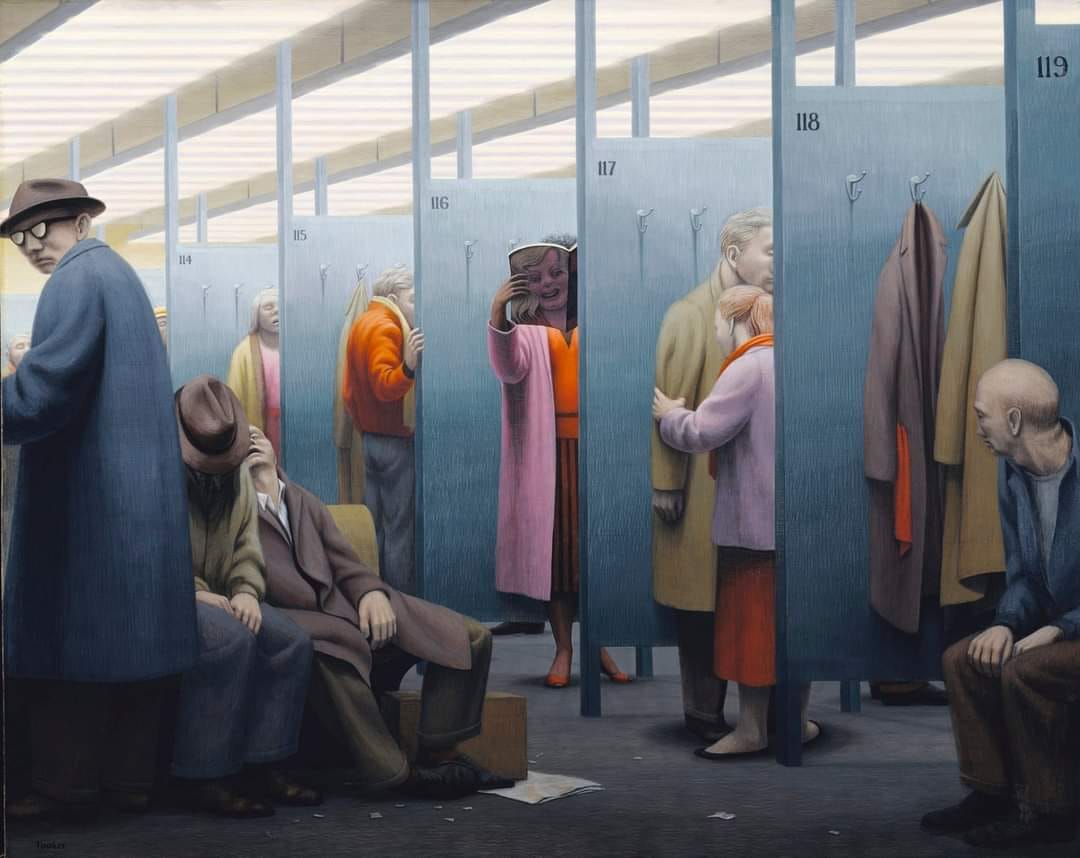
George Tooker’s eerie and captivating paintings took on art’s biggest themes of desire, death, religion, and grief. As a queer artist working in the 1950s, Tooker railed against the established status quo in both his life and art, with his work focusing primarily on critiquing the isolation and disaffection prevalent in an increasingly Capitalist and bureaucratic world. His works combine qualities of Surrealist dreamscapes, political commentary, and Renaissance painting techniques to create disturbing, yet beautiful, images of everyday human struggles. As a staunch anti-Capitalist and critic of the government, George Tooker documented the effects of the Depression in the city, and the stranglehold of government imposed red tape and bureaucracy on people’s lives as they became increasingly desperate and increasingly de-individualized via officialdom. Karl Marx’s theory if alienation (1932) describes how individuals become estranged from themselves, and others via the Capitalist system and their own social classes. Tooker was himself a communist, and alienation is always present in his works, which multiply faceless or identically faced people, who are often alone and expressionless subjects of an employment or government machine.

Subscribe to our whatsapp channel!

Tooker was an out gay man in the 1950s, and his queerness is evidenced by the often androgynous, non-gendered, figures he portrays. Tooker’s work also shows an unusual and remarkable empathy for women; while the Surrealists used women as symbols, erotic objects of their own desire, Tooker shows women as equal non-subjects of Capitalism, as well as painting experiences of social anxiety that are particularly linked to femininity (as in his most famous work, The Subway). Later in life, after the death of his life partner, Tooker moved inwards to works that explore his own internal and spiritual life. Although figures remain central to his work, the city is replaced by the artist’s own imaginary life, rife with religious symbolism, particularly around death, grief, and the afterlife.


mediastaff
Author: mediastaff

Leave a comment

Leave a Reply

Related Articles
ArtCultural IconsNaturePaperSustainable

Story Of a Lily In 10 Poses (The Ortolan Lily 2025)

The 2025 edition of Nola’s Festa dei Gigli, an intangible heritage of...

ArtIllustration

Shaun Tan: The Art of Storytelling Without Words

Shaun Tan (born 1973) is an acclaimed Australian artist, writer, and filmmaker...
Painting

Artemisia Gentileschi: The Woman Who Painted Back

I will show Your Illustrious Lordship what a woman can do. Artemisia...

Explore Arteide across the globe

The Arteide Magazine is the new point of reference for exploring the vast world of art and culture. Your daily dose of inspiration, astonishment and information.

Terms of Service and Privacy Policy